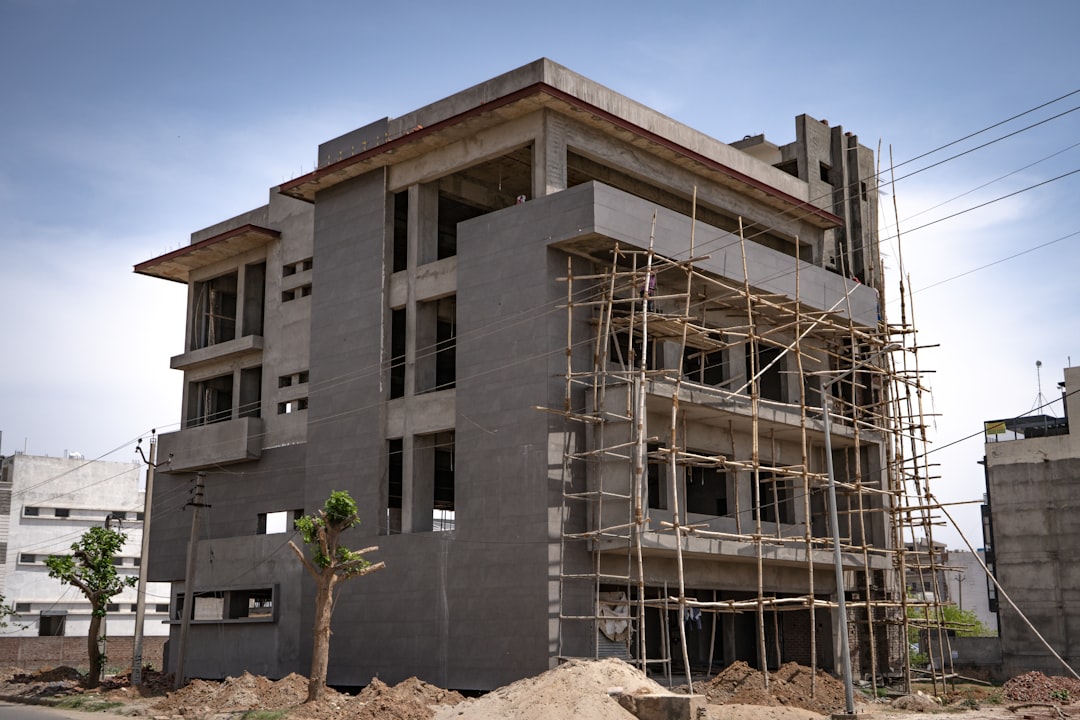
A commercial construction loan funds a build in stages, with each progress draw released as a build milestone is reached and verified by a quantity surveyor. Gearing is measured against total development cost and end value, not a single loan-to-value figure. Interest is commonly capitalised within the facility through the build. Non-bank lenders can consider reduced or nil presale cover and higher leverage where the feasibility and exit stack up.
For local buyers, construction loans funds the build in stages, with draws released against the program as work is completed, and is business-purpose finance arranged through non-bank and private lenders.
See Bottom Line Finance for the current service details.
Construction Loans Explained
Rather than advancing the full loan amount up front, the lender funds the build through a series of progress draws. Each draw is released as a defined build stage is reached, usually confirmed by a quantity surveyor, with a retention held back until practical completion. This ties the lender's exposure to actual project progress and gives the borrower interest efficiency, because interest accrues only on the drawn balance.
Gearing is measured against two metrics: the loan to total development cost (LTC) and the loan to value against the gross realisable value. A facility that tracks both gives a clearer picture of feasibility than a single snapshot LVR. Interest is commonly capitalised within the facility across the construction period and settled at completion.
- Progress draws aligned to the build program and quantity surveyor reports.
- Gearing measured against total development cost and gross realisation.
- Retention held back and released at practical completion.
- Interest commonly capitalised within the facility through the build.
How a facility is sized and priced
The key variables are the loan to cost, the loan to value against end value, the level of presale cover, the strength of the builder, and a clear takeout or sell-down strategy. Pricing and leverage shift with each of those factors rather than following a fixed schedule. Stronger presale cover and lower gearing tend to produce keener pricing, while a higher-leverage, low-presale structure carries a higher cost and is more likely to require a non-bank lender.
The clarity of the exit is as important as the raw numbers. Lenders want to understand how the facility gets repaid, whether through presales, a refinance to residual stock finance, or a bulk sale, and whether the timeline is realistic given the build program.
When a non-bank lender suits better than a bank
Major banks apply conservative policy on presale requirements and leverage caps. When a project falls outside those parameters, a non-bank lender considers the deal on its merits. Common situations include:
- Higher leverage than bank policy allows, where preserving equity is a priority.
- Presale cover below the threshold a bank requires.
- A tighter build program or settlement timeline than a major bank can meet.
- A non-standard project structure where the numbers stack up but the deal does not fit a standard credit template.
Non-bank lenders assess feasibility and exit more holistically, which can open options that remain closed under mainstream bank policy. Pricing reflects the higher risk tolerance the lender accepts, so the decision comes down to whether return on equity justifies the cost of capital on that deal.
Bottom Line Finance arranges commercial construction funding through non-bank and private lenders for developers and builders who need leverage, speed or a structure outside standard bank appetite. For a broader view of how private capital is deployed across development projects, the private lending in Australia guide covers the full spectrum of non-bank debt instruments from caveat loans to mezzanine.
Construction finance versus development finance
A construction loan is the senior facility that funds the build itself. Development finance is a broader strategy that may also layer in mezzanine debt, preferred equity or stretched senior to lift total leverage across both land and build. Many projects begin as a single construction facility and evolve into a full development funding stack as the feasibility is refined.
A project with strong presales and modest leverage may need nothing beyond a senior construction facility. A higher-leverage project seeking to minimise equity contribution may require a layered stack where the construction loan sits as the senior tranche, with mezzanine or preferred equity behind it. Understanding where a project sits in that spectrum shapes which lenders are relevant and what the total cost of capital looks like.
Who this applies to
Commercial construction finance of this type is business-purpose lending. It is relevant to:
- Residential developers building townhouse projects, apartment towers or land subdivisions.
- Commercial developers funding retail, office, hotel or short-stay projects.
- Industrial developers where strong tenant demand supports the feasibility.
- Builders carrying their own development risk on a project.
- Developers refinancing into a residual stock facility once practical completion is reached.
This is not consumer credit and does not apply to owner-occupied home construction. The ASIC Moneysmart home loans guide covers residential construction lending for consumers. Commercial construction finance is assessed on project feasibility and exit, not personal income serviceability.
Capital structure across the project lifecycle
A development project typically passes through several funding phases. Land acquisition may be funded through a caveat loan or bridging facility. The construction phase draws down the senior facility in progress draws. If presales are insufficient to repay the facility at completion, a residual stock loan refinances the unsold dwellings and releases equity tied up in finished product.
Mapping the capital structure across the full lifecycle avoids a refinance cliff at completion. The presale position and realistic sell-down timeline feed into a structure that holds together from start to settlement.
- Define the project scope. Set the total development cost, end value and build program before approaching lenders, as these drive every gearing and pricing conversation.
- Establish the presale position. Quantify presale cover early, as it directly affects which lenders will consider the deal and at what leverage.
- Model the capital structure. Determine whether a single senior construction facility covers the funding need or whether a layered structure including mezzanine or preferred equity is required.
- Appoint a quantity surveyor. Most lenders require an independent quantity surveyor to verify progress before releasing each draw, so engage one early in the process.
- Plan the exit clearly. Document the sell-down or refinance strategy so lenders can assess how the facility gets repaid within the agreed timeline.
| Factor | Construction loan | Development finance |
|---|---|---|
| Scope | Funds the build only | Funds land, build and may include mezzanine or preferred equity |
| Structure | Senior facility, progress draws | Layered capital stack, multiple tranches possible |
| Gearing benchmark | LTC and LVR on end value | LTC across full development cost including land |
| Presale requirement | Varies by lender, nil possible with non-bank | Varies, higher leverage structures may need more presale |
| Interest treatment | Commonly capitalised through build | Depends on structure and lender mix |
| Exit | Presales, residual stock refinance or sale | Full sell-down, refinance or capital event |
Common questions
Do I need presales to get a construction loan? Not always. Bank facilities typically require presale cover, but some non-bank lenders will consider reduced or nil presale where the feasibility, gearing and exit support it. Requirements are deal-dependent.
How are construction funds released? In progress draws against the build program, verified by a quantity surveyor. A retention is held back and released at practical completion.
Is interest paid monthly during the build? Often interest is capitalised within the facility through construction and settled at completion, though this depends on the lender and structure.
Can a construction loan fund both land and build? Yes. Many facilities cover land acquisition and construction together. Higher-leverage structures may add mezzanine or preferred equity to reach the required loan to cost.
What is the difference between loan to cost and loan to value in construction finance? Loan to cost (LTC) measures the facility against total development cost; loan to value (LVR) measures it against the projected end value. Lenders assess both because a project can look comfortable on one metric while stretched on the other.
What happens at practical completion if presales do not cover the facility? A residual stock loan can refinance the unsold completed dwellings, releasing the equity tied up in finished product and giving the developer time to sell down without a forced exit.
This guide covers how commercial construction loans work in Australia, including progress draw mechanics, gearing metrics, non-bank versus bank lending, capital structure across the project lifecycle, and the distinction between construction finance and broader development finance.